Sub-Total: $0.00
Paraquat Restrictions in Australia: What They Mean for Spray Operator Safety
Recent paraquat restrictions have put operator safety back in the spotlight
The Australian Pesticides and Veterinary Medicines Authority (APVMA) recently announced on 23 June 2026 new restrictions on the use of paraquat and diquat in Australia following a comprehensive review of these herbicides.
While paraquat remains available for use, the updated regulations introduce stricter requirements around application methods, mixing and loading procedures, personal protective equipment (PPE) and, for many broadscale spraying operations, the use of enclosed tractor cabs.
For farmers and spray operators, the review is an important reminder that operator safety doesn't rely on a single piece of equipment — it relies on a complete protection system.
What changed?
The APVMA review introduced several measures designed to further reduce operator exposure during chemical application, including:
- New restrictions on how paraquat can be applied.
- Mandatory enclosed mixing and loading systems.
- Updated PPE requirements.
- Changes to some application rates and use patterns.
- Greater emphasis on enclosed tractor cabs for broadscale spraying.
The full requirements depend on the product label and application method, so operators should always follow the latest approved label directions.
The key message is clear: reducing operator exposure is a major focus of the new regulations.
Why this matters to tractor operators
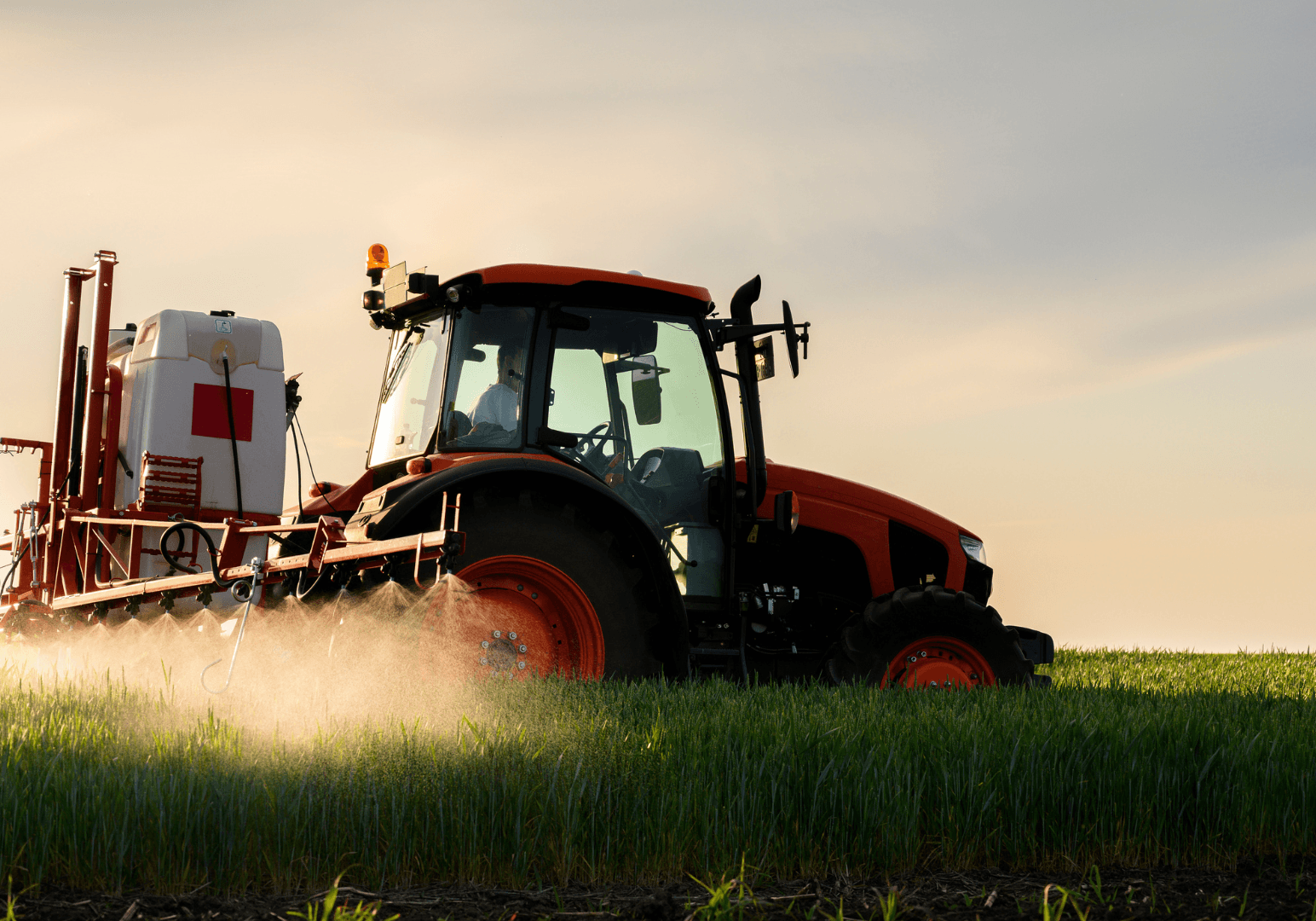
One of the most significant outcomes of the review is the increased importance placed on enclosed tractor cabs during certain spraying operations.
An enclosed cab helps separate the operator from the external spraying environment, reducing potential exposure to agricultural chemicals.
However, it's important to understand that an enclosed cab is only part of the protection system.
Contaminated air still enters the cab through the ventilation system, meaning the type of cabin air filter fitted to the machine also plays an important role.
Not all cabin filters are designed for chemical spraying
- A standard cabin air filter is only capable of capturing particles such as dust, pollen and dirt from the air entering the cab.
- An activated carbon cabin filter is different. In addition to capturing particles, they are specifically engineered to adsorb chemical aerosols and vapours entering the air supplied to the cab during spraying operations.
If you're applying agricultural chemicals, understanding which type of filter is fitted to your machine is an important part of protecting yourself and your workers.
| STANDARD DUST FILTER | ACTIVATED CARBON CABIN FILTER |
| Captures dust and pollen | Protects against dust, pollen and chemical vapours entering the cab |
| Suitable for general field work | Designed for chemical spraying applications |
Looking after your cabin air filter
Even the best cabin air filter won't perform as intended if it has reached the end of its service life or has been incorrectly installed.
Before spraying, it's good practice to check:
- Do I have an activated carbon filter fitted?
- Is the filter due for replacement or recharge?
- Are the cab seals in good condition?
- Are doors and windows sealing properly?
Today's discussion is about paraquat. Tomorrow it could be another chemical.
Agricultural chemicals, regulations and best practices continue to evolve as new research becomes available. While the recent APVMA review has focused on paraquat, the principles of protecting operators remain the same regardless of the crop protection product being applied.
Whether you're spraying paraquat, glyphosate, fungicides or insecticides, ensuring your tractor's cabin filter is appropriate and correctly maintained is an important step in protecting operators from chemical exposure.
A dust filter cannot provide the same protection as an activated carbon cabin filter during chemical spraying, making it important to understand what is fitted to your machine before heading into the paddock.
Regulations may change.
Products may change.
But protecting the health of the person behind the wheel should always remain the priority.
Frequently Asked Questions
Is paraquat banned in Australia?
No. Paraquat remains registered for use in Australia, but the APVMA has introduced new restrictions and updated use requirements following its final review published on 23 June 2026.
Does an enclosed tractor cab provide complete protection?
An enclosed cab is an important part of reducing operator exposure, but it forms part of a complete protection system that also includes using an appropriate cabin air filter. If you're spraying agricultural chemicals, an activated carbon cabin air filter plays a vital role in helping protect the operator from chemical aerosols and vapours.
Can a dust filter remove chemical vapours?
No. Dust filters are only capable of capturing airborne particles such as dust and pollen. They are not designed to adsorb chemical vapours during spraying operations.
How often should a cabin air filter be replaced?
Always follow the filter manufacturer's recommendations. As a general guide, Ultrasafe recommends servicing chemical cabin filters every 12 months or 400 operating hours, whichever comes first.
How do I know which filter my tractor needs?
The easiest way is to search using your tractor make and model or speak with our team to identify the correct cabin air filter for your machine.
Protect yourself before your next spray application
Recent paraquat restrictions serve as a timely reminder that operator safety starts long before entering the paddock.
Understanding your tractor's cabin filtration system, maintaining your equipment and using the correct cabin air filter can all contribute to helping reduce operator exposure during spraying operations.
If you're unsure which cabin air filter is fitted to your tractor or whether it's suitable for chemical spraying, use our Filter Search or contact the Ultrasafe team for expert advice.